Nuriva — an ear-worn wellness device to help you keep the progress you fought for.
Whether medication, discipline, or both changed how you eat — the hard part isn't starting. It's staying there through ordinary weeks: travel, stress, a day on your own. Nuriva is a non-invasive, ear-worn wellness device designed to support appetite awareness and healthy eating habits, built for exactly those moments.
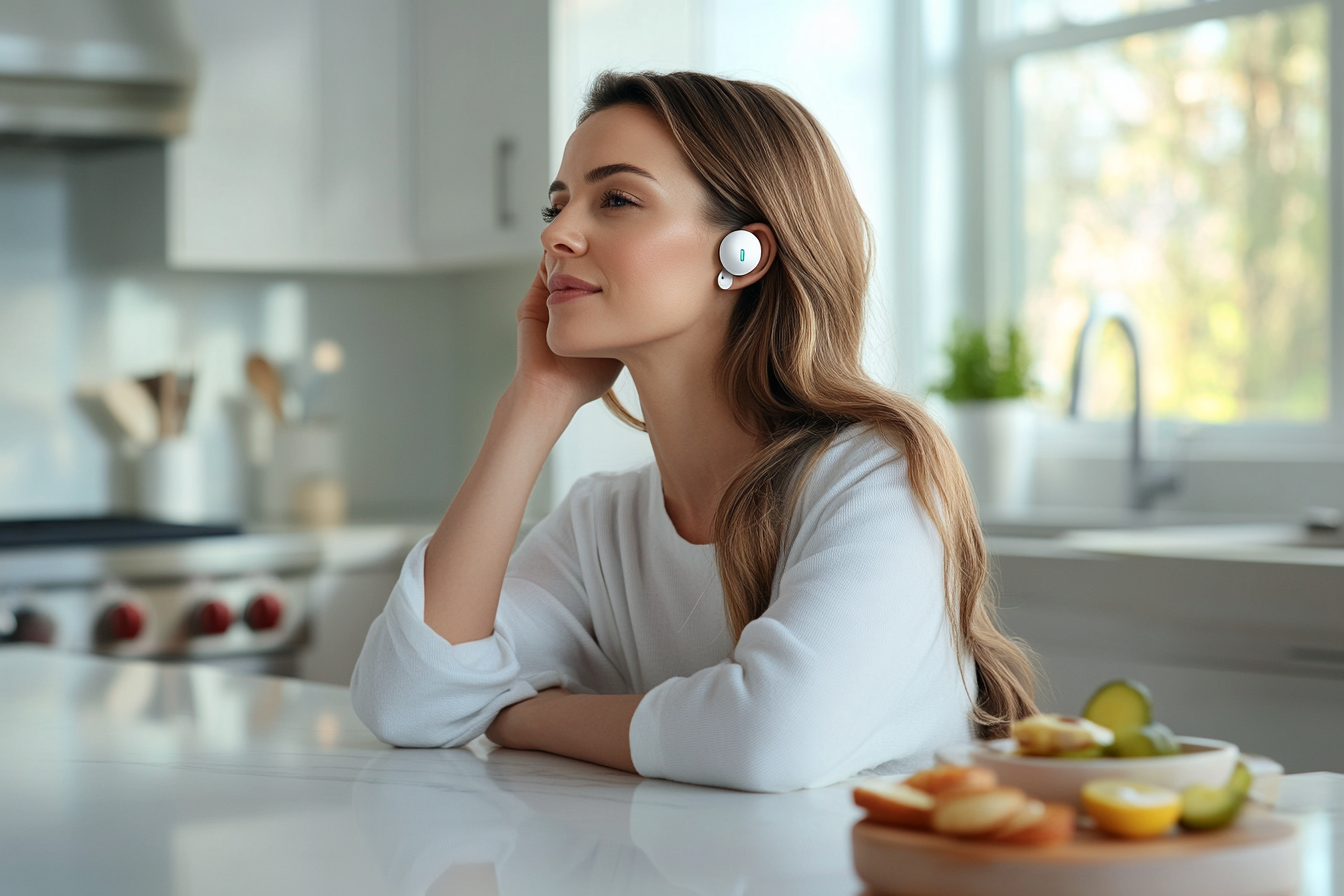
Lifestyle image — founding batch ships July 2027.
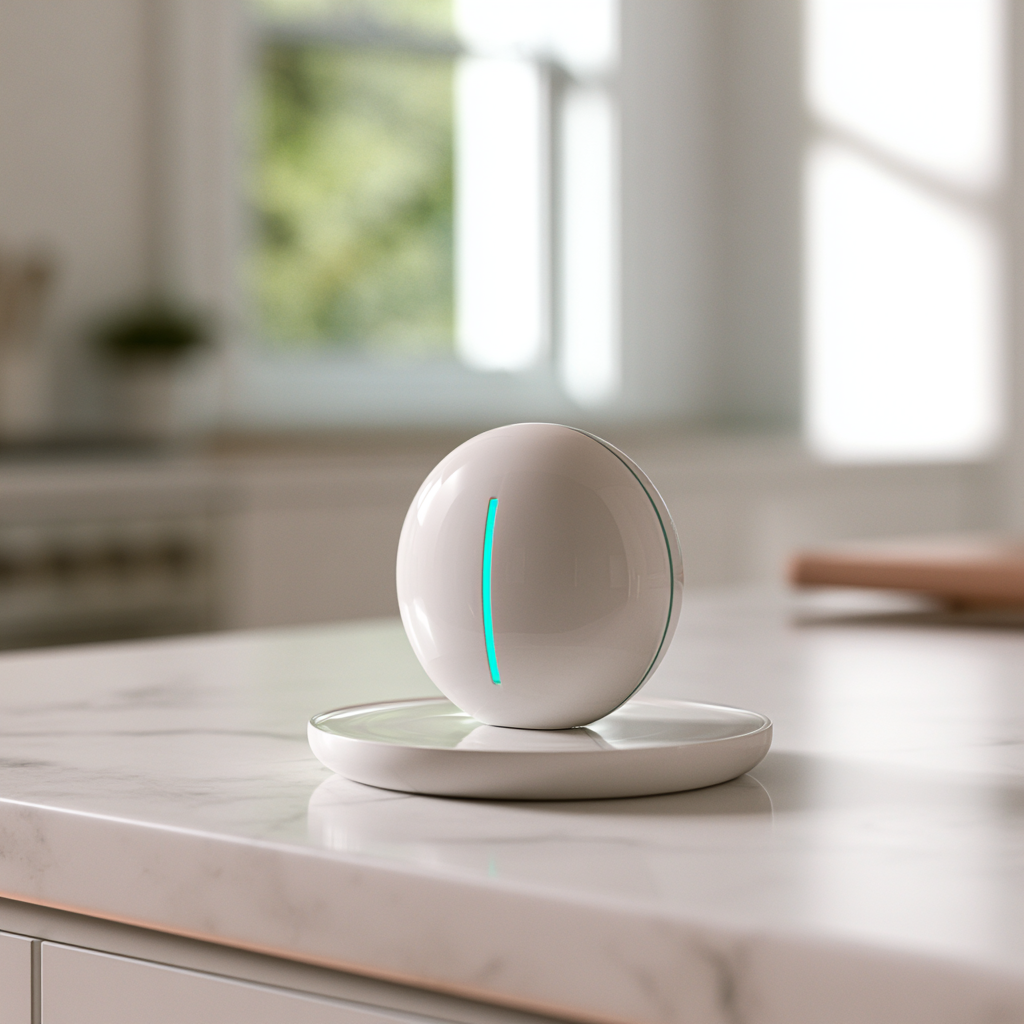
Product rendering — founding batch ships July 2027.
Starting is the easy part. Staying is the fight.
When everyone's ordering and the plan you had at home stops feeling real.
The day was fine. The evening is where it unravels.
Nothing's wrong, nothing's changing, and quitting starts to sound reasonable.
Nuriva isn't a replacement for medication, willpower, or any treatment you and your doctor have chosen. What it's designed to do is give you a calm, deliberate moment at the times cravings and appetite are hardest to manage — so the habits you've built have a better chance of sticking, with or without medication.
A calm moment, wherever the day happens.
Three steps, twenty minutes.
Clip the sensor to your outer ear. No skin prep, no wires to untangle, no setup beyond putting it on.
Start a session from the app. A gentle, adjustable signal runs for about 20 minutes — comfortable enough to do while you read, walk, or sit with a craving.
Use it at the moments that matter — before a meal, during a craving, or as a wind-down ritual — and let it become part of how you eat.
Become a Founding Member
- Locked $299 founding price (planned retail: $499)
- A guaranteed device from our first production batch
- A numbered Founding Member ID (#1–#300)
- Monthly founder updates as we build
- A vote on product decisions before launch (strap colors, app features)
Built to ship — by founders who've done it before.
Nuriva pairs fifteen years of US consumer business-building with hands-on medical device regulatory experience — FDA clearance and CE marking included.
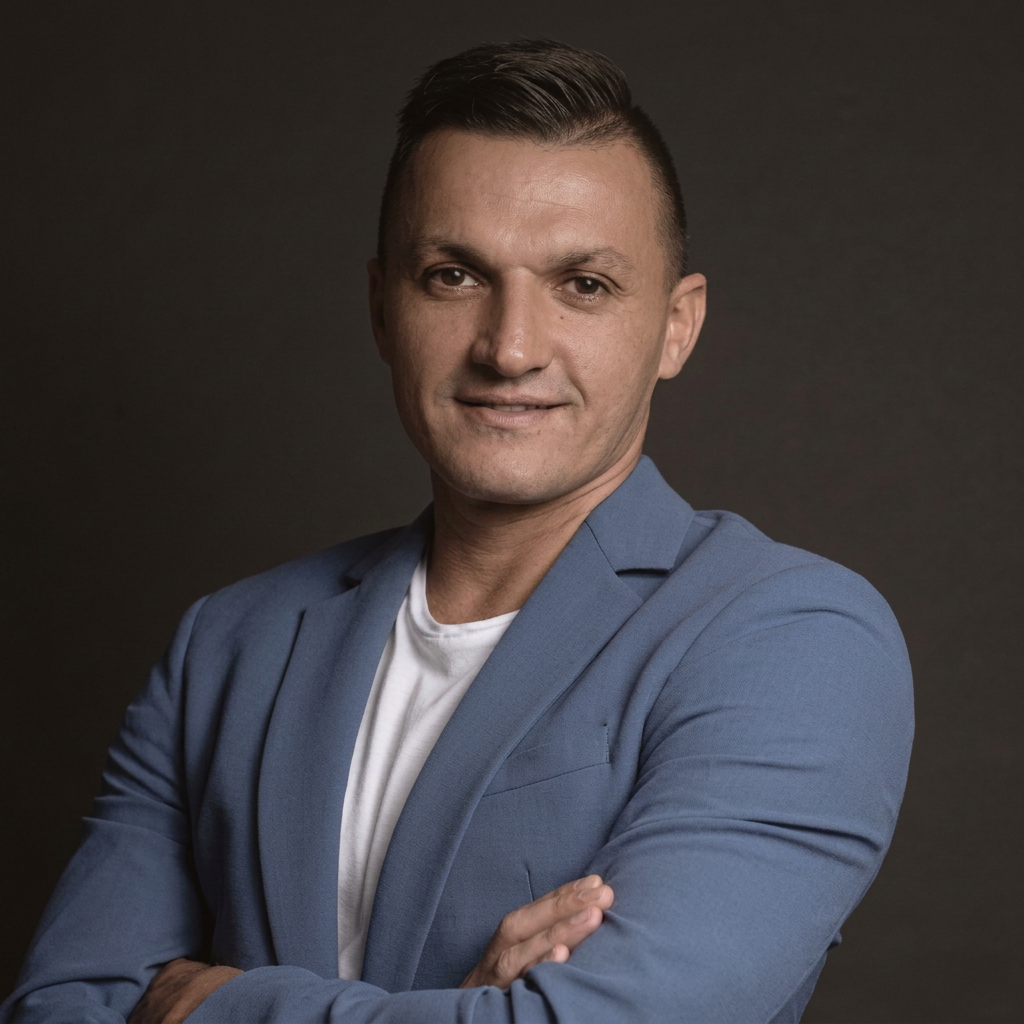
Serial entrepreneur — founder & CEO of Velum Design, building premium consumer businesses across the US and Latin America since 2011.
LinkedIn ↗
Serial health-tech founder — co-founded Revolab Health, taking at-home diagnostic devices through FDA Class I clearance and CE marking. Previously NASDAQ OMX.
Also co-founder of CardiWE, an AI cardiovascular risk platform.
LinkedIn ↗
Engineering leader with deep experience in embedded systems, signal processing, and regulated hardware development.

Professor at Vilnius University and leading researcher in non-invasive neuromodulation and applied neurophysiology.